Stem Aware EQ Compression Guide for Stems
September 6, 2026
This stem aware EQ compression guide explains how role-based processing clears masking, controls dynamics, and keeps your mix decisions visible locally.
Notes on mixing and mastering from stems — loudness targets, spectral unmasking, vocal riding, and what an AI can and can’t do to a multitrack.
This stem aware EQ compression guide explains how role-based processing clears masking, controls dynamics, and keeps your mix decisions visible locally.
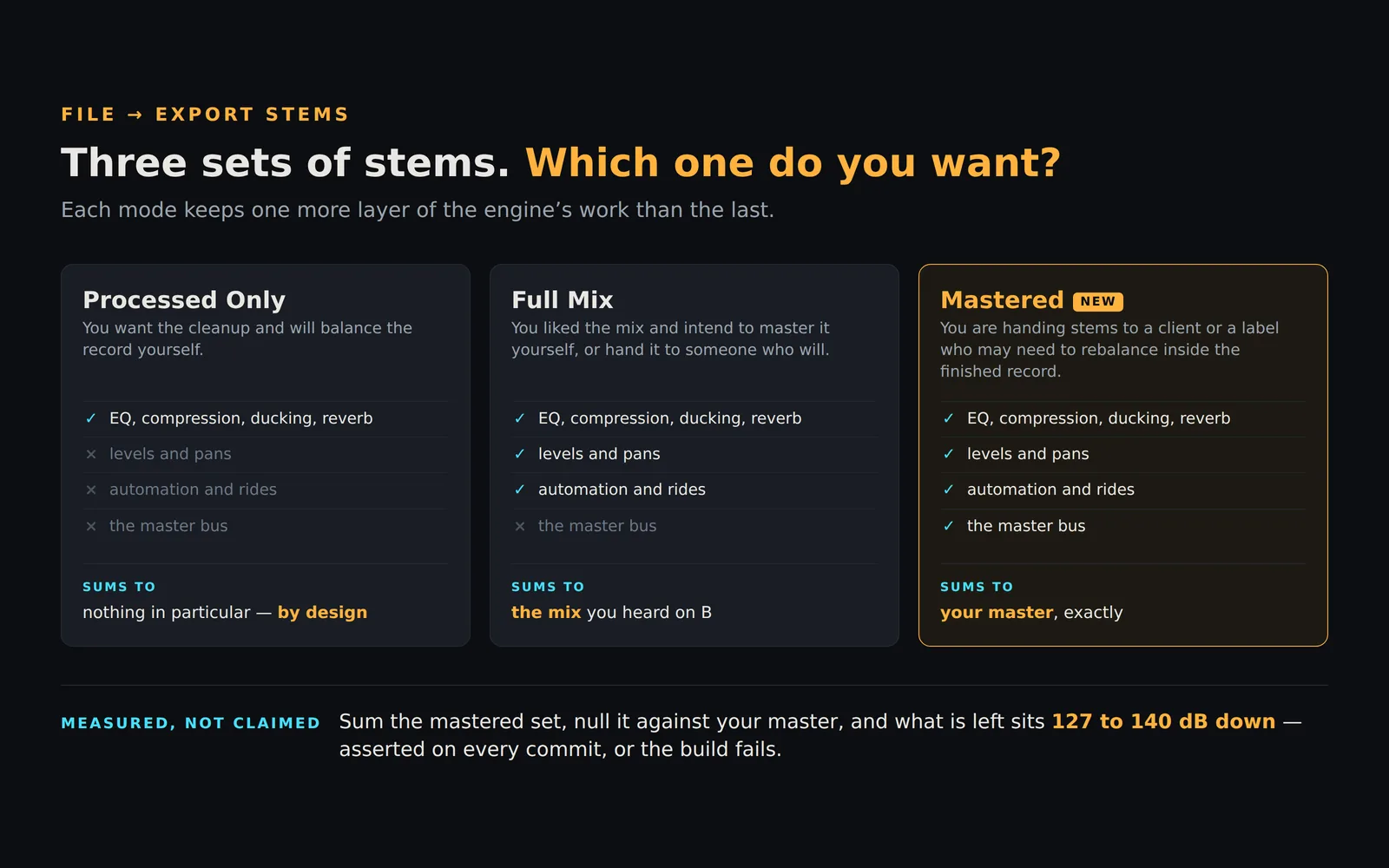
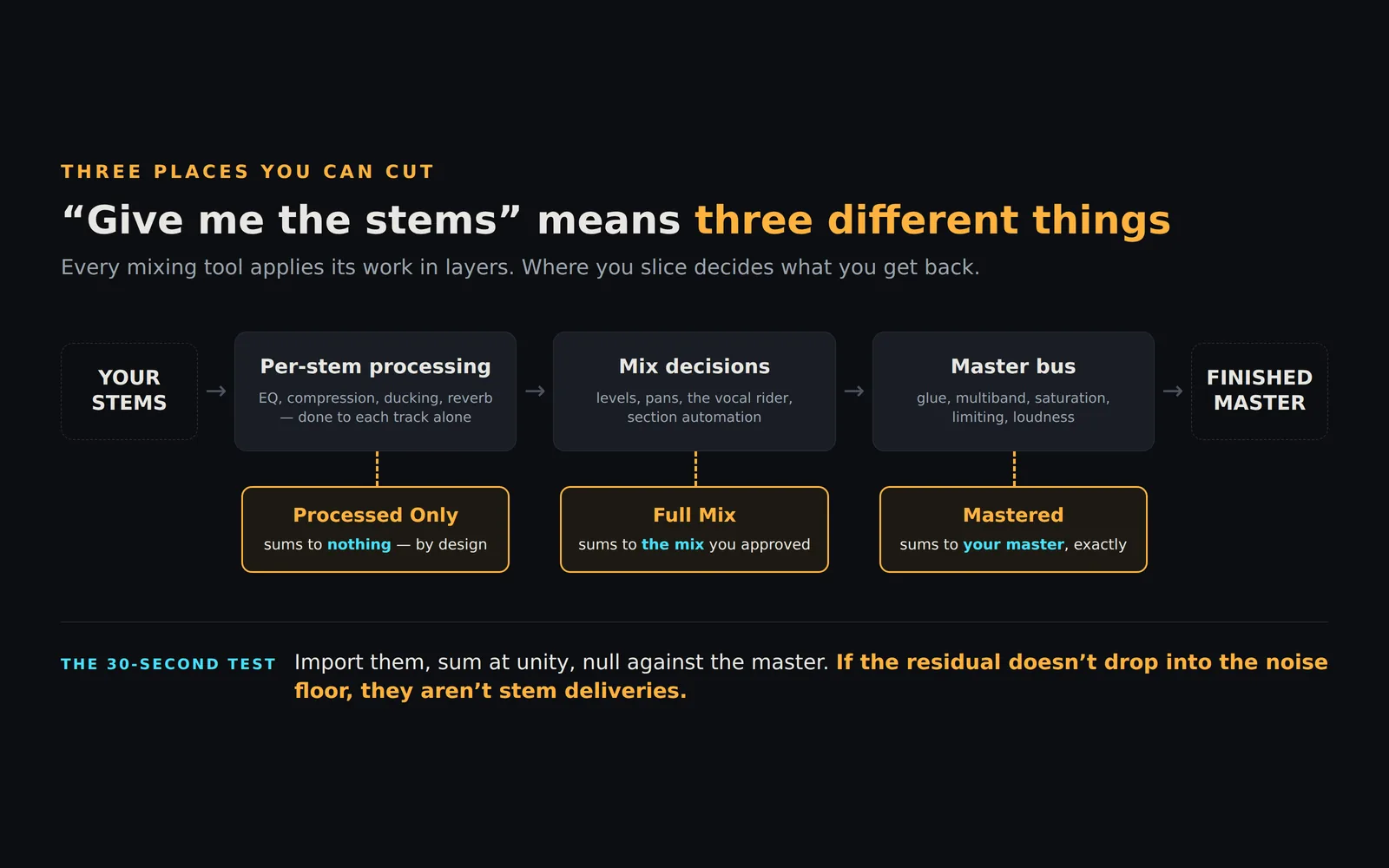
StemMaster now exports stems at three different points in the chain — before the mix, after the mix, and after the master. They answer completely different questions, and picking the wrong one wastes an afternoon. Here is the difference in one sentence each.
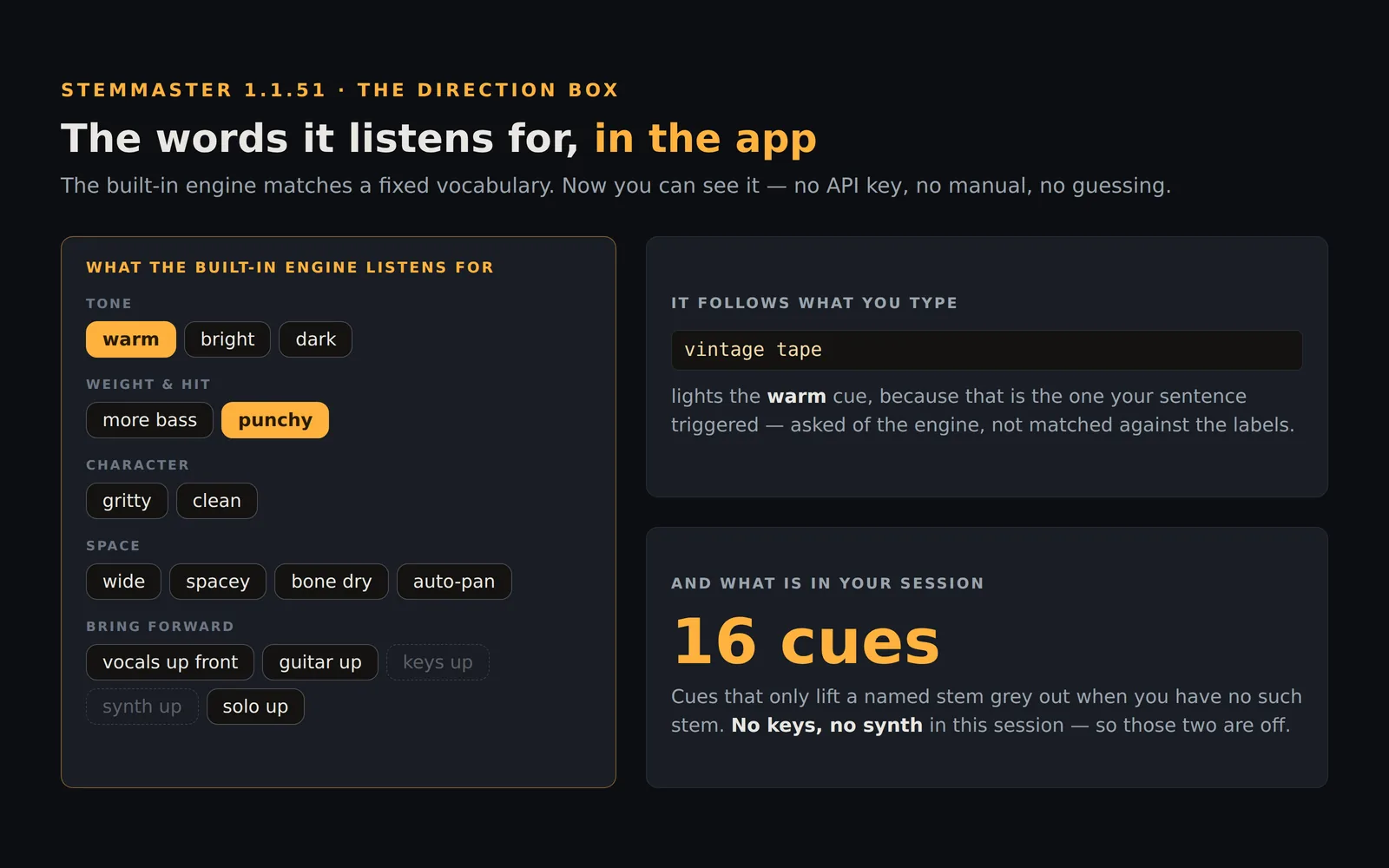
StemMaster's built-in engine understands sixteen terms and no others. Until 1.1.51 the only way to learn them was the manual - and the one button that showed you what to say refused to work without an API key you did not need. Both are fixed.
Can AI mix multitrack stems well? See how stem-aware processing balances vocals, drums, bass, and space while keeping each decision visible and adjustable.
Suno gives you up to twelve stems. Here is what they actually are, the problems every set has, and a workflow that turns the folder into a master you would be comfortable releasing, on your own computer.
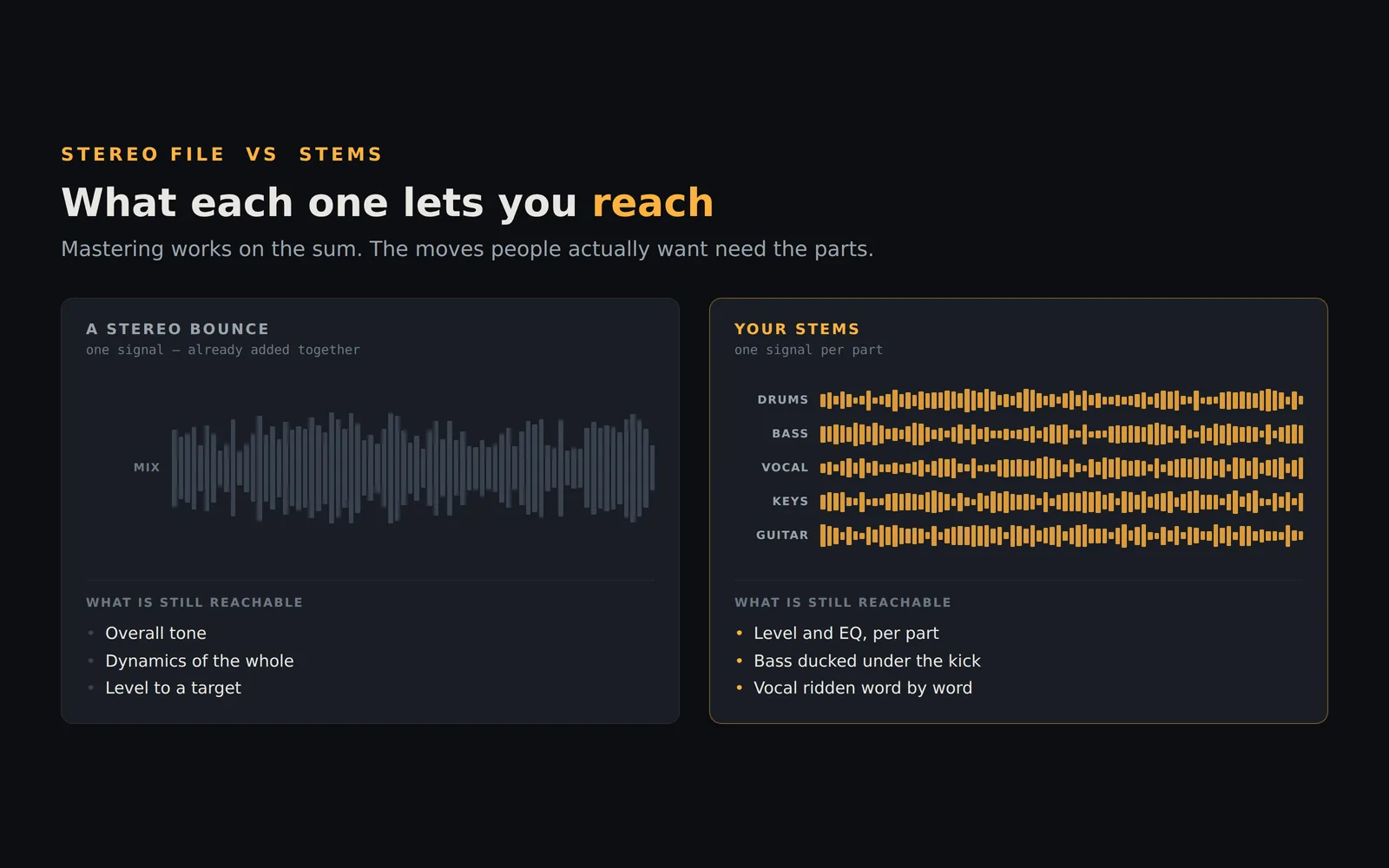
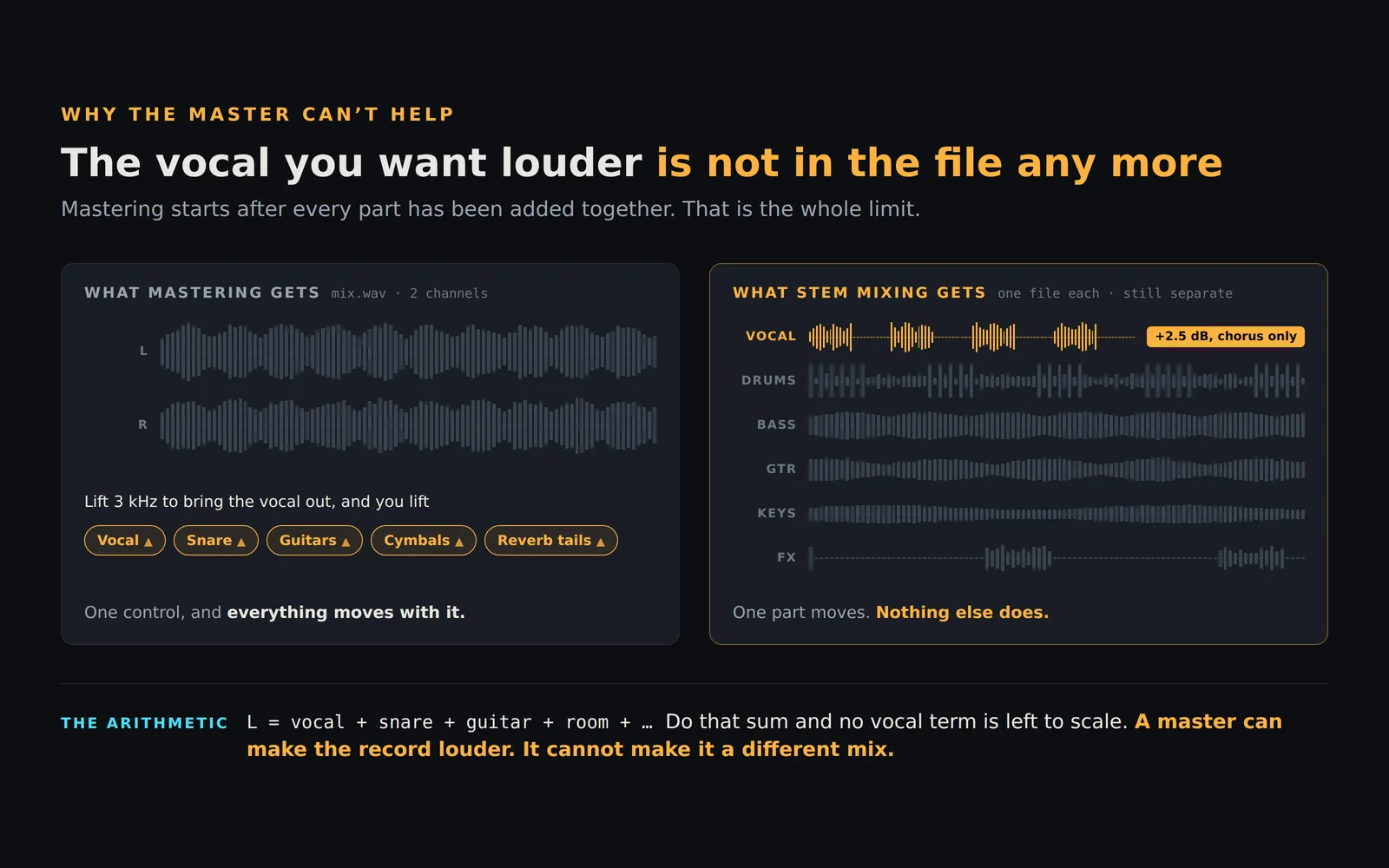
Most people looking for a LANDR alternative are not unhappy with the loudness. They are unhappy that the vocal is still buried. That is a stereo-file problem, and no mastering service can solve it from a stereo file.
Learn how to master stems offline with visible processing, targeted control, matched A/B checks, and privacy that keeps every multitrack local secure.
Stem mixing vs stereo mastering determines what can be repaired before release. Learn which workflow gives vocals, drums, and bass real control.
StemMaster now runs on macOS 15 or newer with Apple Silicon. Intel Macs are not supported. What it needs, and how to check which Mac you have.
This mixing stems guide shows how to prepare, balance, process, automate, and verify multitrack sessions for clean, controlled release masters reliably.
Find the best AI mastering software Windows creators can run locally, compare stem-aware control, transparency, loudness, privacy, and workflow speed.
Use this LUFS targets streaming club guide to choose integrated loudness, true-peak ceilings, and master versions that translate from clubs to streaming.
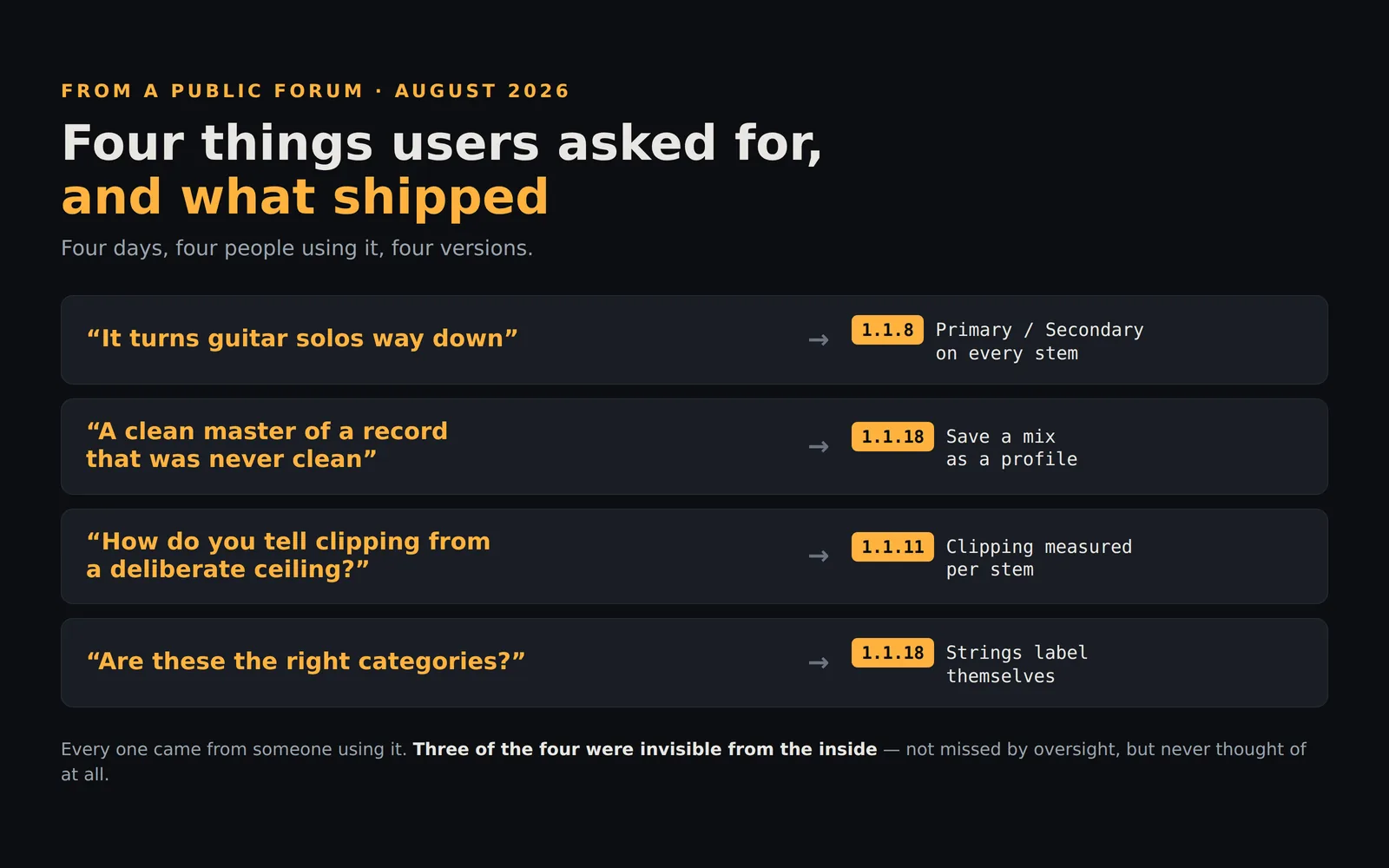
In four days on a public forum, StemMaster picked up Primary/Secondary stems, custom sound profiles, clipping measurement and string labelling. Each one came from someone using it, and each shipped within about a day.
Learn how to mix vocal stems with level rides, subtractive EQ, controlled compression, de-essing, depth, and loudness checks that preserve emotion today.
Learn how to automate stem levels with visible decisions, practical override control, and stem-aware processing for better release-ready masters, fast.
Learn how to fix kick bass masking with arrangement, phase, dynamic EQ, and level moves that keep low end powerful, defined, punchy, and mono-compatible.
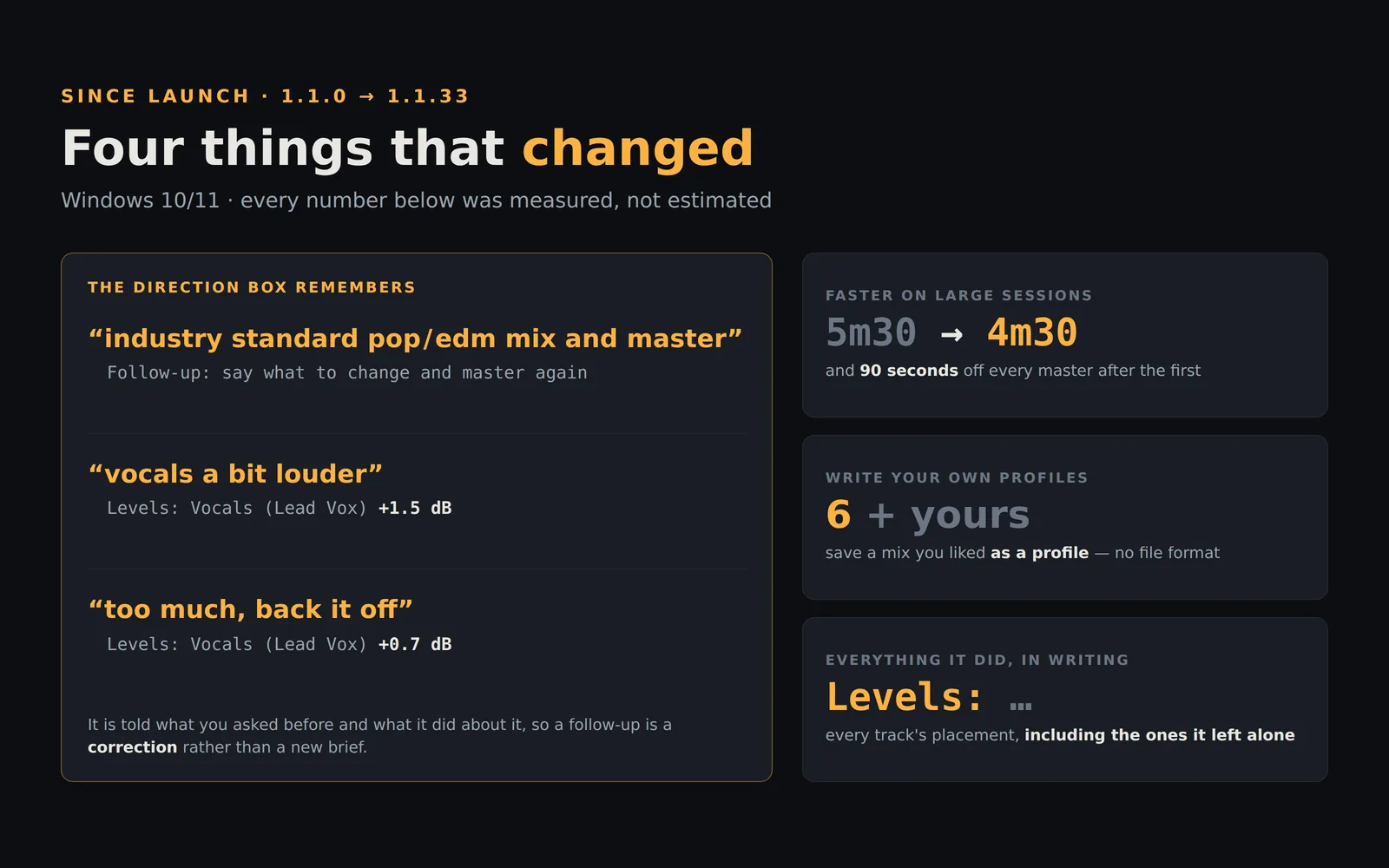
Thirty-three point releases since 1.1.0. The four that changed how it is used: it got faster on large sessions, you can write your own sound profiles, the Direction box remembers what you asked for, and the notes now say where every track was placed.
Automatic mix automation can finish stem sessions faster without hiding the decisions. See what a transparent, local workflow should actually control.
Learn how a stem aware equalizer detects vocal, bass, and drum masking, applies targeted EQ, and keeps every processing decision visible to you clearly.
Learn how to export stems mastering engineers can trust: clean files, aligned starts, headroom, no master-bus traps, and a reliable delivery check first.
A text based mixing assistant should explain its moves, process stems locally, and leave you in charge of levels, tone, space, and final master quality.
Reference track matching software can guide tonal balance and loudness, but it should not erase your mix decisions or hide the processing behind AI tools.
Set a club loudness mastering target that hits hard without flattening the mix. Learn LUFS, true peak, dynamics, translation, and stem-level fixes for DJs.
Spotify loudness mastering guide for producers: hit clean playback targets, protect dynamics, and avoid true-peak distortion after encoding on Spotify.
Learn how to separate kick bass with arrangement, phase checks, EQ pockets, sidechain control, and mono low end - without thinning either instruments.
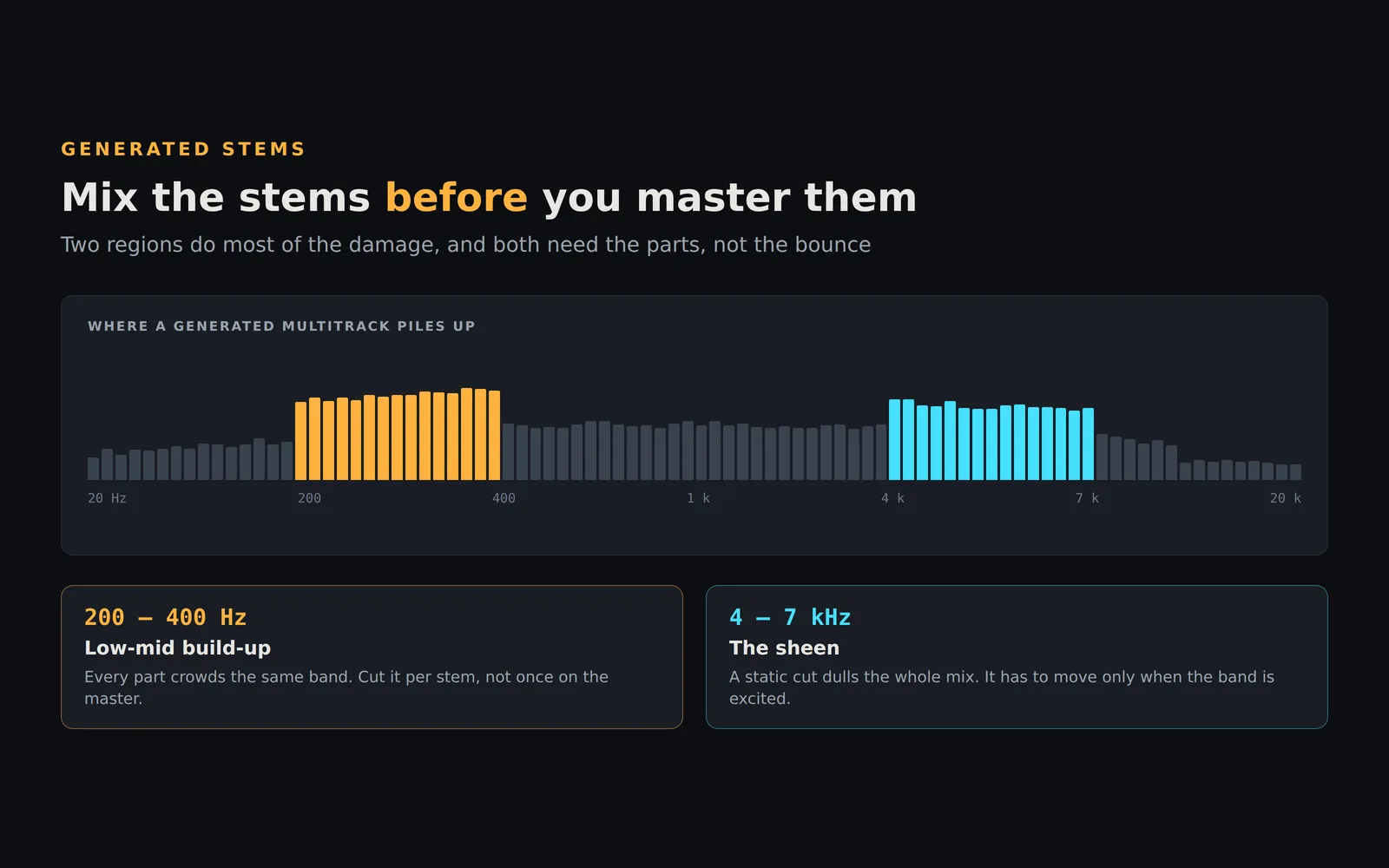
Learn how to reduce spectral masking with focused EQ, arrangement, dynamics, and stereo choices that create clearer, louder mixes without harshness at all.
Mastering works on a stereo file, so a vocal that sits too low in the mix stays too low. Here is what changes when the tools work on your stems instead, and how to check the claim yourself.
Automatic vocal ride software can balance changing performances fast, while keeping every gain move, masking fix, and final decision visible to you always.
Explainable AI mixing software shows every gain move, EQ decision, and master-stage choice so producers can refine stems with confidence and control daily.
No subscription mastering software can deliver stem-aware control, local processing, and clear engineering notes without a monthly bill or cloud upload.
Most AI mixing tools hand you a stereo file and keep everything else. Here is why getting the individual stems back matters, what "the stems" can actually mean, and which version you want.
Offline audio mastering software keeps stems private, automates the hard engineering work fast, and lets you inspect, compare, and adjust every decision.
AI stem mixing software balances vocals, drums, bass, and space while showing its decisions, so you can refine a release-ready master with confidence.
StemMaster mixes and masters your song from its stems — and explains every decision it makes. One-time purchase, and the built-in analysis engine is the default and runs fully offline. Free demo.
See what it does